Ask Extension

Recent Articles

Link

Wednesday, March 13, 2013

Avoid having the most expensive lawn in the neighborhood

Following water restrictions saves big dollars 

The Southwest Florida Water Management District’s Government Board has unanimously voted to implement a Modified Phase III Extreme Water Shortage in the Tampa Bay area, effective March 13, 2013. Watering at restricted times in Pinellas County will result in a fine of $193.00.

Customers can avoid fines by familiarizing themselves with the new rules. If you choose to use a sprinkler timer, check to make sure it is operating correctly and has the appropriate times. One fine can quickly make your lawn maintenance the most expensive in the neighborhood.

Some of the features of the new restrictions include:
  • Watering 1 day per week (Monday to Friday) 
  • Reduced hours before 8 a.m. or after 6 p.m. 
  • Car washing one day per week on your regular watering day 
  • Fountains can operate 4 hours per day 
  • Low volume irrigation during authorized hours only 

Addresses with
“house numbers”
May only
irrigate on …
Ending in 0 or 1Monday
Ending in 2 or 3 Tuesday
Ending in 4 or 5Wednesday
Ending in 6 or 7Thursday
Ending in 8 or 9Friday
Rights-of-way, common
areas and other
“no address” locations) 
Friday

The watering restrictions for St. Petersburg water customers located within City limits is as follows:


● Even numbered property addresses should irrigate on Saturday ONLY
● Odd numbered property addresses, or locations with no address, should irrigate on Sunday ONLY
● Irrigation is allowed between 5 a.m. to 9 a.m. or 7 p.m. to 11 p.m. on the assigned day

These mandatory restrictions apply to properties using potable (city) water, private well water, and private connections to surface water sources (lakes, ponds, etc.) for watering. These restrictions do not apply to irrigation with reclaimed water.

More information can be found online at
www.stpete.org/WateringRestrictions or by calling 892-5300.

For more information about the Modified Phase III Extreme Water Shortage restrictions, please visit www.pinellascounty.org/utilities and click “Watering Schedule” on the menu.

To receive important notifications by email, customers are encouraged to go to Utilities My eAccount and add or update their email address. To access your account, visit www.pinellascounty.org/utilities and click on the Utilities My eAccount button. For more information, contact Customer Service at (727) 464-4000.

For more information on Pinellas County services and programs, visit www.pinellascounty.org or create a shortcut to www.pinellascounty.org/mobile on any smartphone. Pinellas County government is on Facebook, Twitter and YouTube. Pinellas County complies with the Americans with Disabilities Act.

Friday, March 8, 2013

The Sinkhole Story

Click for large view
Lara Miller,
Natural Resources Agent

You’ve heard it in the news and you’ve seen it in your neighborhood, sinkholes are happening, but why? Underneath your home, garden or business is a layer of Karst topography or landscape. This Karst topography is made up of limestone rock which is composed of a mineral called calcite. Calcite is a mineral developed from fossilized remains of sea creatures that died and sank to the ocean floor 25 to 60 million years ago. Over these millions of years, shell remains became compacted into layers of whitish rock we know as limestone.

Karst topography is the reason Florida has sinkholes, springs, disappearing streams and even caves. Rainfall that percolates or seeps through the soil absorbs carbon dioxide and reacts with decaying vegetation along the way which leads to water that is slightly acidic. This acidified water slowly dissolves limestone rock as it moves through spaces and cracks underground, creating a network of cavities or holes. These holes serve as a sink for more acidic water, leading to larger cracks and voids over time. Sinkholes form when the underlying layer of limestone rock can no longer support the overlying elements (sediments, houses, etc.) and the earth collapses into the cavity.

Do sinkholes happen naturally or are humans contributing to these events?

Natural factors can contribute to ideal conditions for sinkholes to form. For example, a heavy rain following a long period of drought can cause enough overlying pressure in certain areas to cause the earth to cave in. Higher levels of pumping or removal of groundwater can also contribute to the formation of a sinkhole, especially during long periods of time with little to no rain.

Aside from the obvious damage sinkholes can cause, are there any other concerns?

Sinkholes may contribute to water quality problems if rainwater is not filtered by the soil and plants before reaching the aquifer, our underground source of drinking water. In an ideal scenario, rainwater will be caught by the leaves, branches and bark of trees and vegetation before it hits the ground. These obstacles slow the momentum of rainwater allowing it to seep into the soil to be filtered by the natural system before entering the aquifer. In the case of a sinkhole, rainwater flowing into the cavity may reach our aquifer without being filtered and result in reduced water quality.

Resources and additional information:

http://www.swfwmd.state.fl.us/hydrology/sinkholes/brochure.pdf

http://edis.ifas.ufl.edu/dh399

Thursday, March 7, 2013

Visit PEEP at Boyd Hill's Wildlife Weekend


Stop by the Pinellas Energy Efficiency Project booth 
during the annual 
Wildlife Weekend at 
Boyd Hill Nature Preserve
March 9 & 10 (this Saturday and Sunday)

Spin the wheel of energy savings and get a free solar powered calculator! Get free information on ways to lower your home electricity bill, courtesy of  Pinellas County Extension.

You'll also enjoy nature exhibits, tours, music, crafts, food and more.

Wildlife Weekend is free and open from 10am to 4pm at
1101 Country Club Way S.
St. Petersburg, FL 33705

Monday, March 4, 2013

One Earth, One Hour, Join Earth Hour 2013

Ramona Madhosingh-Hector,
Urban Sustainability Agent

Get a head start on this year’s Earth Day celebration by pledging to participate in the seventh Earth Hour (http://earthhour.org/) campaign. The purpose of Earth Hour is to draw attention to climate change and unite people to protect the planet and make proactive changes. Participants commit to switching off lights for one hour. The organizer’s “60+” logo represents a pledge to do a positive act for the planet that goes beyond the hour. This year’s Earth Hour will occur on Saturday March 23 between 8:30 and 9:30 PM local time.

In 2012, more than 7,000 cities and towns in 152 countries switched off their lights for one hour. Earth Hour encourages participants to take personal responsibility for their impacts on the planet and to make behavior changes to promote a sustainable lifestyle. Turning off the lights is a symbol of your pledge to get involved but it doesn’t have to stop there! Earth Hour organizers also encourage participants to sign up for the “I Will If You Will” challenge to continue to inspire and share the commitment to protect the planet.

For more information about Earth Hour, check out the official video and the frequently asked questions. You may also get updates via social media feeds like Facebook and Twitter.

Get involved and “dare the world to save the planet”!

Resources:

World Wildlife Fund  http://worldwildlife.org/pages/earth-hour

Climate Change  http://www.epa.gov/climatechange/

Earth Hour City Challenge  http://worldwildlife.org/pages/earth-hour-city-challenge

Thursday, February 28, 2013

The Merits of Buying Florida Seafood

Libby Carnahan,
Pinellas County Sea Grant Extension Agent

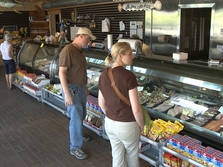
Seafood is an important part of a healthy, well-balanced diet. According to health experts, eating fish just two times a week can significantly help to reduce the risk of heart-related death. However, seafood markets can be overwhelming. Seafood can vary significantly by price, type, and origin. With so much variety, how do we make good choices when buying seafood?

With over 80 different varieties, including shrimp, lobster, tuna, grouper, and mahi mahi, Florida has many great options for the consumer. Florida is one of the most competitive and active seafood markets in the world, with commercial landings in 2009 of over 88 million pounds of seafood products with a dockside value of over $145 million (FWRI 2009 Commercial Landings Data).


There are many positive merits for the environment, the economy, and the community to purchasing local Florida Seafood. Florida fishermen are required to follow strict federal and state laws that help protect the long-term sustainability of domestic fisheries for future generations. Despite dramatic changes to many of Florida’s coastal communities in recent decades, several communities have maintained their traditional working waterfronts and continue to harvest, process and sell seafood. By investing in local fishermen, consumers help to strengthen their local communities.

Florida seafood, like all U.S. seafood (both domestic and imported) must also follow protocols to ensure the safety and quality of the product. Purchasing seafood from reputable licensed vendors helps to ensure products are harvested, processed and sold according to federal, state, and local regulations. To find where you can purchase Florida seafood products visit the http://www.fl-seafood.com/consumers/wheretobuy.htm page. Health experts recommend eating a variety of seafood to maximize its multiple health benefits and mitigate potential risks. By choosing different types of seafood, you also help reduce pressure on highly targeted species as well.

Typically buying locally harvested seafood will significantly reduce one’s carbon footprint as there are usually fewer steps involved in processing the product and it doesn’t have to travel as far to reach the consumer. However, in some cases it might not be possible to buy Florida-harvested seafood. The product might be out of season or unavailable, it could be too expensive, or it simply is not harvested in the area (i.e. salmon or sea scallops). When possible consider purchasing seafood products that are harvested regionally or in the U.S. to further support the long-term health and sustainability of domestic fisheries. To learn more about U.S seafood visit the http://www.nmfs.noaa.gov/fishwatch page.

Further Reading

Bryan Fluech, "Why Buy Local Seafood? The environmental and socio-economic benefits of eating Florida Seafood". http://collier.ifas.ufl.edu/SeaGrant/pubs/Benefits_of_Eating_Florida_Seafood_Fact_Sheet[1].pdf

Tuesday, February 26, 2013

Seminole Discussion Group on Recycling and Sustainability

Monday, March 4, 2013  
10 a.m. to noon
 
Seminole Community Library Program Room 
9200 113th St. N
Seminole, Florida 33722

Enjoy this special program that relates to this special area of Florida! 

Tampa Bay Watch, Inc. is a 501(c)3 non-profit organization dedicated exclusively to the protection and restoration of marine and wetland environments of the Tampa Bay estuary through scientific and educational programs.

Come hear Rachel Arndt, Communications Coordinator for Tampa Bay Watch show a power point presentation about this wonderful organization.

We will also hear from Jim Igler, a diver for Tampa Bay Watch who has volunteered since 1993. Jim will discuss his fond memories of the work that's been going on to promote the steady progress of this important community organization!

Don't come alone! Bring along your friends!

For more information and to RSVP, contact Mary, queenofrecycle@hotmail.com.

Monday, February 25, 2013

Pinellas County citizens survey opens online and on the go

Got two minutes to help shape the future of Pinellas County?

Residents can take a brief online survey to share their vision about what is good and what needs improvement in Pinellas County. How do people’s priorities align with present realities? What do they want the county to be like in five years?

As the Pinellas County Board of County Commissioners continues to set a strategic direction for the community, feedback from the survey will help set priorities that align with the vision of the citizens they serve.

Citizens can take the survey from 9 a.m. Monday, Feb. 25, to 5 p.m. Friday, March 1.

The survey has gone mobile this year and is accessible at www.pinellascounty.org/mobile. The survey can also be found on the Pinellas County website at www.pinellascounty.org.

“The online survey is one of the tools we are using during the initial phase of prioritizing for the next year’s budget and as we continue to set long-range strategic direction this feedback will guide us toward a vision the community shares,” said Pinellas County Administrator Bob LaSala. “It is absolutely necessary to gather this feedback in order to learn the goals of the residents as individuals and then ultimately as a community.”

This is the third year that the county commission has collected input from residents with an online survey. It follows a statistically valid phone survey that was taken during the past month which targeted a cross-section of the county’s residents. The results of both surveys will be posted online once the information is compiled.

Another opportunity to offer feedback and interact with the county commissioners is coming up on Wednesday, April 10, from 5:30 to 8 p.m., when the Pinellas County 2014 Budget Community Forum is held at the Seminole campus of St. Petersburg College in the Digitorium. An open house and eTownHall will give officials and residents a chance to talk about budget issues and the future of the community.

For more information on Pinellas County services and programs, visit www.pinellascounty.org, now with LiveChat, or create a shortcut to www.pinellascounty.org/mobile on any mobile device. Pinellas County government is on Facebook, Twitter and YouTube. Pinellas County complies with the Americans with Disabilities Act.

Facebook